 Book a free autopsy

























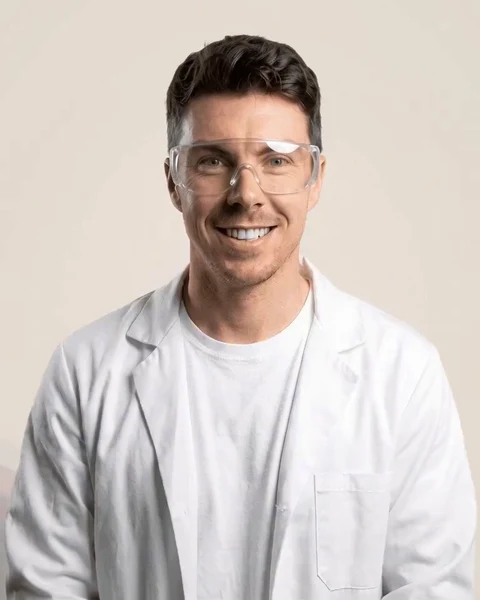
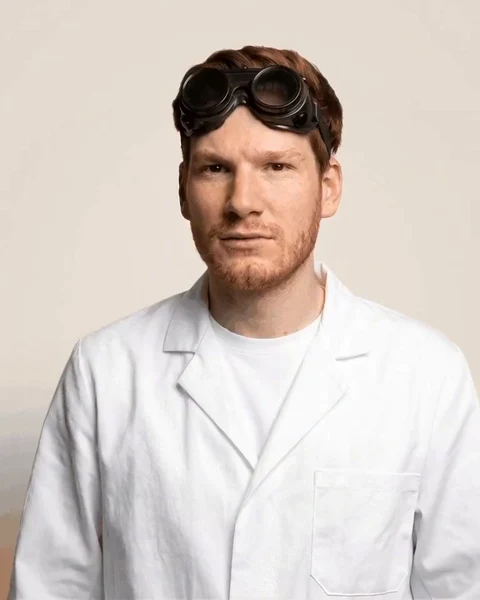




































FilmingTape 058▶ 11:2212 Aug 2025
What I actually do on solar video shoot days
Prompting beats scripting every time
 Jude Cornish, CCO & co-founder
✓£2,000 to start, then nothing until your first deal.
The short answer
On shoot day a videographer with over 10 years' experience captures the footage while our director prompts you to say what will perform, using topics and USPs from the shoot brief rather than a full script. It works best when the person on camera knows the subject well, so we assess that before signing.
A lot of people are surprisingly unclear on this — especially on discovery calls.
They understand that we shoot video.
They understand that there’s a videographer on site.
But they’re not always sure what my role actually is on shoot days.
And it matters more than people think.
We always bring an experienced videographer whose only job is to capture great footage.
My job is different.
I’m there to make sure what you say:
- Resonates with buyers
- Reflects what actually differentiates you
- And turns into ads that generate leads and sales
That usually means prompting, guiding, and helping you get into a natural flow — not scripting you word-for-word.
This video explains how that works, why understanding solar on the day is critical, and why being good on camera isn’t about being “confident” — it’s about genuinely knowing what you’re talking about.
For context, this video was originally recorded on 5 December 2024, views & strategies may have changed since.
Full transcriptRead the full transcript5 min read · 1,238 words · open ▾
▶ 0:00So when I speak to solar businesses on Discovery Cause, a lot of them are actually a little bit confused on what I actually do, not just in general, but on the shoot days, right? But it's actually super important that you've got someone with you on the day that understands solar and can kind of prompt you in the right direction.
▶ 0:15So when we come to shoot for the first time, we'll bring a professional videographer with us that's got 10 plus years experience, but we want them to just focus on what they do best, which is getting the best possible content, positioning you in the right places, and actually filming the footage. My job is to get you to say what is going to perform and to say it in a way that is going to resonate and actually generate leads and eventually sales.
▶ 0:40So what I end up kind of doing is obviously I will come on the day with the shoot brief that we'll have run through beforehand, which will have some scripted elements, but for the most part, it's topics and kind of key themes and USPs that we want to nail. I will then guide you through those hooks and kind of read lines out to you that you repeat the camera.
▶ 0:58But for the most part, I will just try to prompt you so that you can get in a bit of a flow. When you get in a flow, you're just going to start speaking about what you speak about every day and probably have done for years. If you can reach that state where it becomes very conversational, I'll just throw a question in there and you'll start speaking back to me, but through the camera.
▶ 1:17And that's how we create these really nice educational conversational ads that feel like someone's scripted a five minute segment when in reality, we're just having a chat. So you can see, here's me on one of the studios recently for a bullards company called Wentworth Protection, just directing, kind of speaking with the, I still find it weird saying that I'm directing.
▶ 1:38I'm not quite sure I'm qualified to be a director, but technically that's what I'm doing, I suppose. Speaking with the customer on kind of exactly what's going to happen with this little customer interview. Quite often, I end up basically just running around with the shoot brief half of the day and getting bits and pieces for the videographer, et cetera, just trying to be helpful, trying to be useful.
▶ 1:57But I've probably done 40, 50, 60, 70, maybe even as many as kind of 80 of these video shoots now, if you include the ones that we did back in the day with an iPhone. So I'm getting pretty good at knowing when to jump into the conversation, when to stop you, when you need a second to just breathe and actually catch your breath.
▶ 2:17And also kind of quite a lot about the kit, I would say. You know, I'm certainly nowhere near as experienced or technical as any one of our installers, but I'm kind of getting a grasp over the basics, right? So when there's a certain piece of kit that I recognize or a certain thing that you've done or your installation team has done that I can see is maybe a level above what others are doing in the market, I will try and prompt you to talk about that.
▶ 2:41And what's funny is quite often the installer will hear me say it and they'll go, what? Does it, what, really? Everyone, you're telling me that not everyone does that? That's crazy to me. But when you've been doing it for so long at such a high standard, quite often you actually forget what makes your installations quite so strong and the things that you do that you don't even think about that other installers skip.
▶ 3:05So I'm basically there to guide you through the day and to get the most content possible and the best content possible out of you on the day. And to be honest, when you have a discovery call with us, I will actually be assessing how good I think you will be on camera. And if it's not going to be yourself on camera, maybe it's a member of your sales team, your marketing team, then I'll make sure that we have a call beforehand so I can kind of get a little bit of an assessment for whether it's going to be a good fit.
▶ 3:31Because the only shoot we've ever had that wasn't particularly successful, that I didn't come away from the shoot going, yes, we've absolutely smashed that, was one where the individual that was mainly on camera had only joined the business three weeks earlier. Which makes it very, very difficult because they didn't have the understanding that we were looking for and as a result they weren't as confident delivering the pieces because they didn't actually have the fundamental underlying understanding.
▶ 3:56So I'll be assessing that. So if you are able to work with us and on board with us, know that having seen 70 other people do this, I think you can do it too. And I'm going to coach you through it, but to be honest, we won't take on people that I think are going to be bad on camera because it's so central and core to how we advertise.
▶ 4:19If I were to even let you sign on with us, kind of thinking in the back of my head, is this guy or gal going to be good on camera, then we'd have some real serious problems and we would have churned far, far more clients than we have done to date because we would have had far, far more people that just didn't or couldn't deliver on camera when the lens opens up and comes on.
▶ 4:39Right. So I thought I'd just give a little breakdown on kind of what I actually do on these shooting days because obviously for the most part, I'm not the person actually holding the camera, but I still think it's super useful. And we've had direct feedback, for example, from likes of Chris Sadler, Kimball Solar. He says, you know, obviously, I mean, hats off to him, credit to Chris.
▶ 4:59He's fantastic as it is on his own, but he has said that with me, they're prompting or someone that understands solar and knows solar, they're prompting. He can think about what he's saying right now. He can think about delivering what he's currently speaking about. I can be stood there thinking about, OK, where's he going next? What can he talk next?
▶ 5:16What's going to flow really well from this bit? He talks about that, but then he hasn't mentioned this and how that correlates to the customer and what the benefits are. So I can just, when he finishes his segment, I can just throw another prompt at him and immediately he's like, bang, OK, I'm going, I'm gone. And he can flow off that, right? So it's super, super helpful.
▶ 5:35And, you know, hopefully it calms some of the concerns around whether someone will be able to perform on the shoot day. Brilliant. Hope you enjoyed that one and I will catch you in the next one.


Is your area still open? A few installers per area.
Five quick questions, then pick a time with Ben. Thirty minutes on where you're losing sales, and what we'd run instead.
✓£2,000 to start, then nothing until your first deal.