 Book a free autopsy
















































































































































Funnels & websitesTape 035▶ 08:5712 Jan 2025
UTM parameters explained for solar installers
UTMs show what actually makes you money
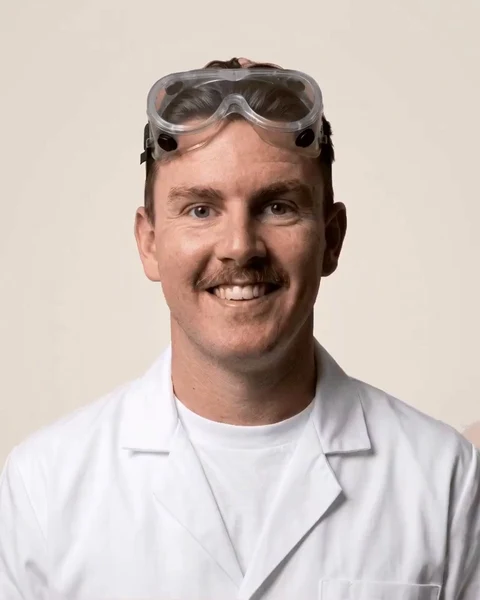
 Jude Cornish, CCO & co-founder
✓£2,000 to start, then nothing until your first deal.
The short answer
UTM parameters tag each link with its source, medium and campaign, so you can see where your leads come from and which ones turn into sales. Paired with a good CRM, they show which source actually closes, not just which is cheapest, so you know where to spend.
This video is about UTMs — and what they actually let you see as a solar installer.
You’ve probably heard the term thrown around by marketers before. It sounds technical, but you don’t need to understand how UTMs work under the hood to get value from them.
What matters is this: UTMs show you where your leads come from, and more importantly, where your sales come from.
In this video I break down what UTMs are in plain English, how we use them across Google and Meta, and why combining them with a CRM completely changes how confidently you can spend your marketing budget.
This is about clarity.
Not complexity.
For context, this video was originally recorded on 12 January 2025, views & strategies may have changed since.
Full transcriptRead the full transcript6 min read · 1,491 words · open ▾
▶ 0:00Good evening and welcome back. This video is for solar installers that want a better idea of exactly where their leads are coming from, both digitally and physically or offline. We're going to talk about UTM parameters and you've probably heard this term thrown around by marketers, people trying to sell you things saying, oh yeah, we'll track it through UTMs, UTMs, we'll put UTMs on that and we'll put tracking on that and whatever else, okay? So it sounds really complex, it's really not and you don't really need to understand anything about how it works, you just need to understand what it does and what it allows you to do and the data that it collects for you, which in the end result actually
▶ 0:39tells you where your leads are coming from and also where your money is coming from, your actual sales. So you might be getting more leads from one source but none of them are closing and you're getting a few leads from another source but every single one of them are closing and if you've got a good CRM setup and you use these UTM tracking parameters, you'll be able to figure that out. So I'm going to take you through what they are, how we use them and then what kind of results you'll get from implementing them. So what does it actually stand for? It stands for Urchin Tracking Module and I didn't know this before I made this video. Apparently it's some discontinued web analytics software that no one's really
▶ 1:18heard of or was acquired by Google many, many years ago. So it's kind of a term that is just stuck rather than actually meaning anything. The important part is the tracking module part. It allows you to track things. It allows you to track the source, the campaign, the term in which the lead actually came from. Okay, so if I go on to here, we'll give it a quick example of what a UTM parameter might look like. Okay, so if I want people to go to my website, which is solaronsteroids.com. Okay, now I'm running Google ads and I'm also running meta ads and I want to know who came from the Google ads and who came from the meta ads. And eventually what that will enable me to do is not only see whether I'm
▶ 2:04getting a lower cost per lead on Google or meta, but which are actually closing, what kind of leads are progressing further through the pipeline. Okay, so in the source, I might put Google or Google ads. Okay, and you can see at the bottom here, what that's done is it's created basically a URL that has some special characters, you know, question mark, which basically is the start of these tags, UTM underscore source, and then Google plus ads and plus just replaces the space. Okay. Now, what if I'm running meta ads, I would change that to meta. Let's say I'm doing Google, then I might have a certain medium. So if, for example, if I change this to Google, and then this to CPC, I know that it's Google ads because it's
▶ 2:51or cost per click Google ads, right? Then if I have a certain campaign, so maybe let's say I'm doing a campaign specifically trying to bid on terms related to solar in Bedfordshire, Bedfordshire here. And then these ones are optional, because that already gives you quite an extensive level of depth. But you could also say maybe you're sending people to different pages or different routes through that campaign. And you can go do a little bit more kind of specifics. Or maybe you're in one version of the campaign, you're offering a no obligation survey. And in the other version, you're offering an instant quote. So you could put on here, instant quote for the campaign term. And you'll see all of a sudden,
▶ 3:35you've built out this link that is pretty extensive. And it looks like an absolute mess. But what this does, when a lead clicks on this link and enters their information to something or converts in some way, this will flow through to whatever tool they converted in. And you can have it flow through both actually in the submission. So for example, for a lot of our clients, when the form is submitted, this just this pure link will submit with the form. And that's great, because it kind of gives them an idea of where it came from. And it gives them a nudge as to what to maybe start the conversation with. For example, if it was in this case, um, you might start the conversation with, uh, oh, hi, thanks so much for checking us out from Google. I saw you saw our, um, our advertisement on
▶ 4:19installing Soda in Bedfordshire. How can I help you today? That kind of thing. But it will also go back into the platform that you actually advertised on. And there are all sorts of other things going on, like pixels and conversion APIs, but for the sake of this video, we'll keep it, uh, consistent on UTM. So that will go back into Google or meta and that will basically inform the platform that there was a conversion or a lead for that specific campaign and that medium and source, et cetera. And that's how you start to build up some really nice analytics on where your leads are actually coming from and where your budget is best spent. Okay. Um, so to give you a quick example of that, we track all of
▶ 4:57that through, uh, perspective, the tool that we use to generate leads for our clients. And we can see stuff like the source of the lead coming from Facebook here. And very soon they're going to be adding the ability to dive deeper into the UTMs beyond just the source. So we do all the campaign stuff, the term stuff, and we'll have all the analytics here. Fortunately, we can still get that data route. So I've just obscured one of the leads to avoid the risk of actually exposing any information, but you can see that we've got the UTM campaign here, Sky TV. So the client's advertisement is basically Paul Sky TV paid for by his solar panels. And that's, uh, tracked there. So we know what advertising it came from. We also know the UTM ID. So that just means top of funnel testing. So that's
▶ 5:43the campaign with the meta. We know that it was a video and we know that it came from Facebook. in this scenario. And that's really useful because that's all feeding through into our back end. We're building out a really extensive operational system with air table, and that will allow us to go and drill down with so much precision on different data points, essentially enabling us to go, okay, so this Sky TV campaign, this type of advertisement that we do for all of our clients, what is the average cost per lead across all of our clients? How does that compare with the other campaign ideas that we've had? How does that hook compare? How does this asset compare? How is this client overall across the board in terms of cost per lead, etc. We will have all of the data and that
▶ 6:28enables us to do some really, really powerful things and leverage the scale that we achieve by running the advertising accounts for over 10 installers and assimilating that data into one place and using that to inform our strategy and decisions for the entire client portfolio. And of course, I've said this point before, but that basically starts to allow the smaller installers and even the midsize ones to go head to head against the energy companies and tech first companies that, you know, derive their business primarily off of software or some sort of quote tool, for example.
▶ 7:00So that's UTM parameters in a nutshell. Hopefully that was useful to you. Part of the reason we have made this video and we'll make other videos similar to it is that whenever we use a term like this, we like to make sure that we can back up what we're saying and that there is an easy to follow explanation for that term rather than just throwing it out and expecting people to understand the world that we're in because we certainly don't understand some of the terms and jargon that gets thrown around in the renewable space as much as we try.
▶ 7:32So I think there's a bit of to and fro and we will catch up where we can and hopefully we can help installers understand our world a little bit better as well. Perfect. Thank you so much for watching and I will catch you in the next one.
 ▶ 03:58The funnel question that filters serious solar buyersJude CornishNo. 033Funnels & websites10 Jan 2025
 ▶ 08:44How to use animations without hurting solar website conversionsJude CornishNo. 031Funnels & websites9 Jan 2025
 ▶ 04:32Where to send Meta ads if you want higher-quality solar leadsJude CornishNo. 029
Is your area still open? A few installers per area.
Five quick questions, then pick a time with Ben. Thirty minutes on where you're losing sales, and what we'd run instead.
✓£2,000 to start, then nothing until your first deal.